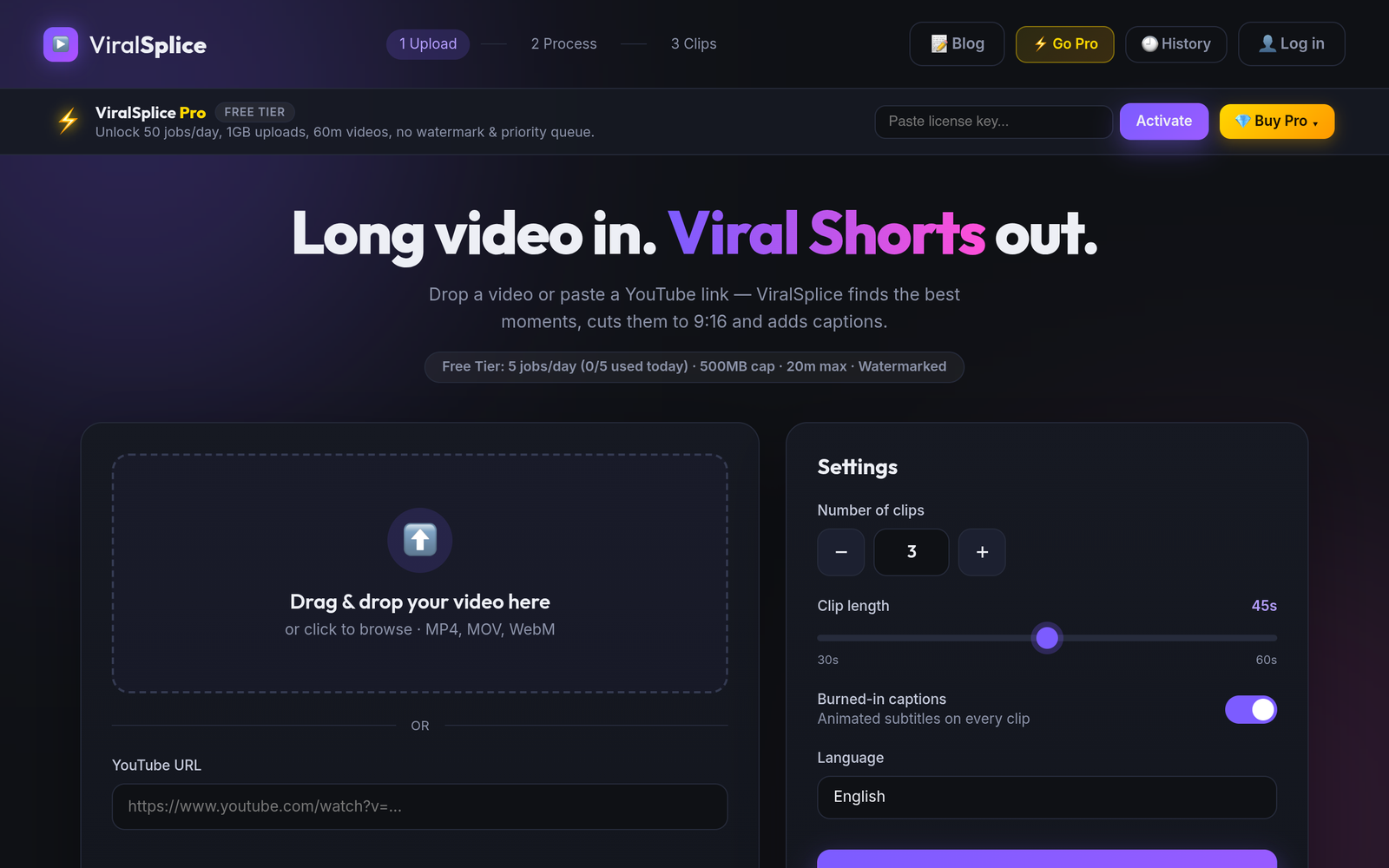
Every clip ViralSplice cuts gets a virality score, and it is easy to treat that number as a verdict. It is not. A virality score is a shortcut: it ranks your clips so you can see, at a glance, which moments are most likely to hold a viewer. Used well, it saves you from watching an hour of footage to find thirty good seconds. Used badly, it becomes a reason to ignore your own judgment. Here is what the score really measures, how to read it, and the routine that turns it into better Shorts.
What a virality score actually is
A virality score is a ranking, not a prediction. It compares the moments inside your own video and puts the strongest ones first. It cannot promise views, because views also depend on the topic, the title, the thumbnail, the time you post, and the audience a platform shows the clip to. What it can do is tell you where the energy in your footage is: the clearest statement, the sharpest opinion, the moment the speaker leans in. Think of it as a first cut by an assistant who watched the whole video, not as a judge.
What goes into the score
Four things matter most. First, the hook: does the moment open with a clear claim, a question, or a surprising statement, instead of warming up? Second, speech density: is someone actually saying something, in clear sentences, without long pauses or filler? Third, focus: does the moment stay on one idea, so a viewer who joins halfway still follows it? Fourth, completeness: does the clip stand alone, with a beginning, a point, and an ending, instead of stopping mid-thought? Captions and pacing support all four: burned-in captions keep muted viewers watching, and a tight cut keeps the energy up.
How to use the score when you pick clips
Start with the highest-scored clips, but watch each one before you post it. Ask three questions: would the first three seconds stop my scroll, does the clip make one clear point, and would it make sense to someone who never saw the full video? If a top-scored clip fails one of those, drop down the list. If a lower-scored clip passes all three, post it anyway; the score ranks moments in your video, it does not know your audience. A good rule is to post two or three clips from one long video, mixing a top-scored moment with one you picked yourself, and watch which one the audience keeps.
What a score cannot tell you
A score cannot tell you whether a topic is trending, whether your title will earn the click, or whether the platform will show the clip to the right people. It also cannot tell you what your audience already heard from you last week; a strong moment repeated too often still feels stale. And it cannot replace the final check: watch the clip once, on your phone, with the sound off. If the captions carry it and the point lands in under a minute, it is ready. If it needs the full video to make sense, it is not a Short yet.
A simple routine for every video
Run the video through ViralSplice, look at the top five clips by score, and watch each one once. Keep the ones that pass the three questions above, add captions if they are not already burned in, and write a title that names the point of the clip, not the video it came from. Post one a day, and keep a note of which clips held viewers. After a few weeks you will see a pattern: the moments you pick and the moments the score picks start to agree, and that is when the score becomes a real shortcut instead of a guess.
Turn your next long video into scored, captioned Shorts at slice.coderao.com, free with five jobs a day and no account needed to start.